
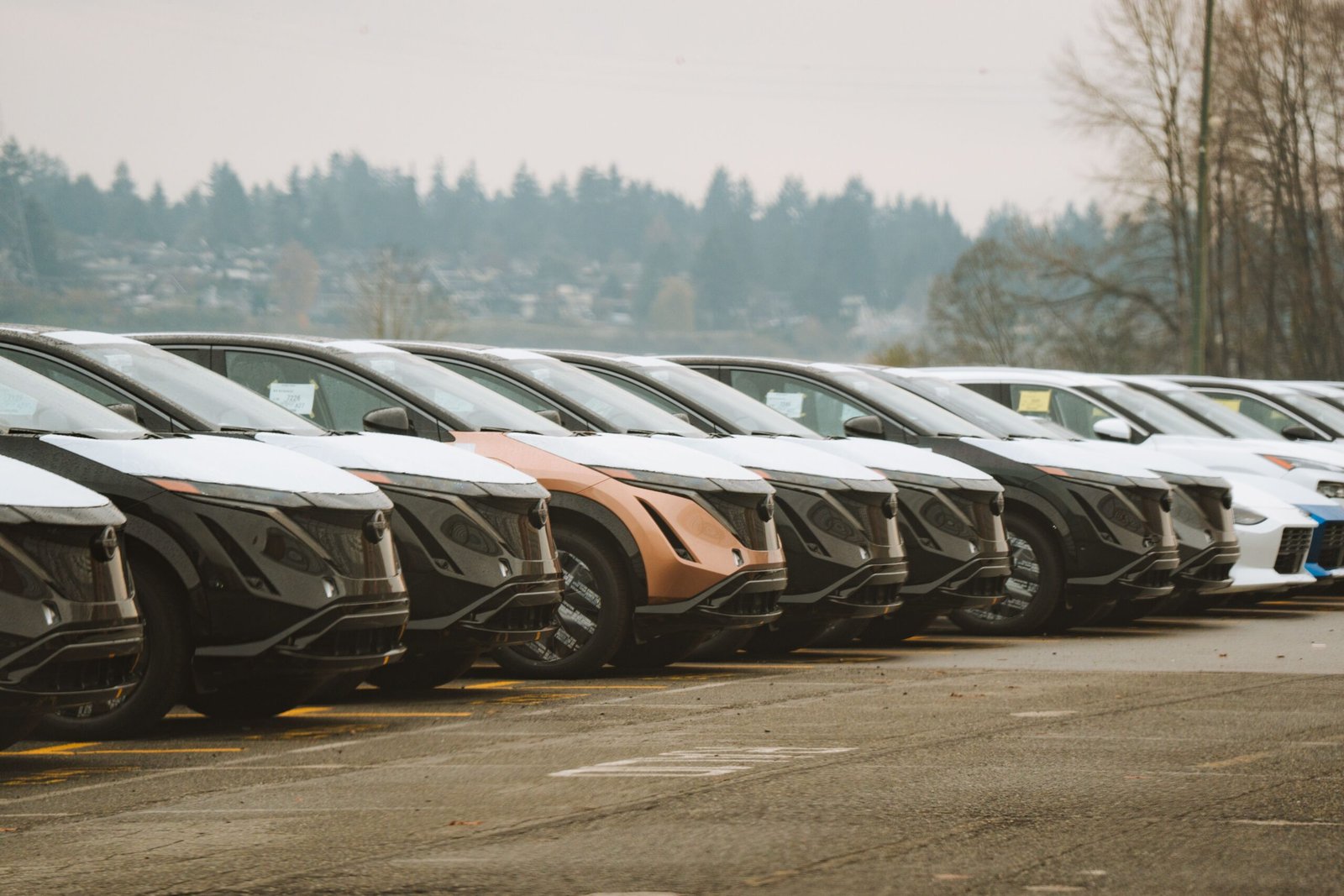
Electric vehicles (EVs) are among the biggest developments in the automotive industry.
Manufacturers are investing in battery-powered vehicles to reduce fuel consumption, improve energy efficiency, and meet changing environmental regulations.
In 2026, electric vehicle adoption continues to expand, although growth varies significantly between countries.
According to the International Energy Agency (IEA), global electric car sales are projected to reach approximately 23 million in 2026, representing around 28% of total car sales.
Important developments include:
- More affordable electric vehicle models.
- Improved battery technology.
- Faster charging capabilities.
- Expansion of charging networks.
- Increased competition among EV manufacturers.
Companies such as Tesla, BYD, Hyundai, and Volkswagen are competing to introduce vehicles with better range, performance, and technology.
Electric mobility is expected to remain one of the industry’s most important long-term developments. <Cite refs={[“turn600848search0″,”turn600848search3”]}/>
2. Hybrid Cars Are Gaining Stronger Demand
Although electric vehicles are attracting considerable attention, hybrid cars are also becoming increasingly important.
Many consumers want better fuel efficiency but are not ready to depend entirely on charging infrastructure.
Hybrid vehicles combine petrol engines with electric motors, providing improved fuel economy without requiring conventional hybrids to be plugged into charging stations.
Popular hybrid technologies include:
- Mild hybrid systems.
- Full hybrid systems.
- Plug-in hybrid systems.
- Range-extended electric vehicles.
Toyota, Honda, Hyundai, and Kia continue to develop hybrid models for different customer requirements.
Hybrid vehicles are particularly attractive in regions where petrol stations are widely available but public EV charging infrastructure remains limited.
Consumer research from Deloitte also identifies growing interest in hybrids as buyers balance affordability, charging access, and everyday practicality. <Cite refs={[“turn600848search6″,”turn600848search7”]}/>
3. Artificial Intelligence Is Transforming Modern Cars
Artificial intelligence is becoming an important part of modern automotive technology.
AI helps manufacturers improve vehicle safety, personalize driving experiences, analyze vehicle performance, and develop intelligent assistance systems.
Some important applications include:
- AI-powered voice assistants.
- Intelligent navigation.
- Predictive maintenance.
- Driver behavior monitoring.
- Automated safety features.
- Personalized entertainment systems.
AI is also being used beyond the vehicle itself. Automotive manufacturers can apply it to factory automation, quality control, supply-chain management, and vehicle development.
As computing technology improves, AI is expected to influence almost every stage of the automotive industry’s operations.
4. Software-Defined Vehicles Are Changing Car Ownership
One of the most important automotive developments is the rise of software-defined vehicles (SDVs).
Traditionally, vehicle functions were controlled by separate electronic components and dedicated control units.
Modern software-defined vehicles increasingly use centralized computing systems to manage multiple vehicle functions.
This allows manufacturers to introduce improvements through over-the-air (OTA) software updates.
Benefits include:
- Remote software updates.
- Improved infotainment systems.
- Enhanced driver-assistance features.
- Better battery management.
- New connected services.
- Improved cybersecurity capabilities.
Some manufacturers are also exploring subscription-based digital features and software upgrades.
According to the IEA, the transition toward centralized vehicle computing is accelerating, particularly in electric vehicles. <Cite refs={[“turn600848search1″,”turn600848search2”]}/>
5. Autonomous Driving Technology Is Advancing
Autonomous driving technology is another major trend shaping the future of transportation.
These systems use cameras, radar, sensors, and artificial intelligence to understand road conditions and perform certain driving tasks.
Important features include:
- Adaptive cruise control.
- Automatic emergency braking.
- Lane-keeping assistance.
- Traffic sign recognition.
- Automated parking.
- Advanced highway driving assistance.
Some companies are also operating commercial driverless taxi services in selected locations.
However, autonomous driving capabilities vary considerably. Most vehicles available to consumers still require an attentive driver who can take control when necessary.
The future of autonomous transportation will depend on technological improvements, safety testing, regulations, and public acceptance. <Cite refs={[“turn600848search0″,”turn600848search4”]}/>
6. Battery Technology and Faster Charging Are Improving
Battery technology plays a major role in the development of electric vehicles.
Manufacturers are working to improve battery capacity, reduce production costs, increase charging speeds, and extend battery lifespan.
Important battery developments include:
- Lithium iron phosphate (LFP) batteries.
- Improved lithium-ion technology.
- Silicon-enhanced battery materials.
- Sodium-ion batteries.
- Solid-state battery research.
Solid-state batteries are particularly promising because they could potentially offer higher energy density and improved safety.
However, large-scale commercialization still faces technical and manufacturing challenges.
Charging infrastructure is also improving, with more investment in high-power charging stations and intelligent charging systems.
These developments could make electric vehicles more practical for everyday use and long-distance travel. <Cite refs={[“turn600848search2″,”turn600848search7”]}/>
7. Connected Cars and Smart Technology Are Expanding
Modern vehicles are becoming increasingly connected through internet services, smartphones, cloud computing, and communication networks.
Connected-car technology allows drivers to access useful information and control certain vehicle functions remotely.
Popular features include:
- Smartphone connectivity.
- Real-time traffic information.
- Remote vehicle monitoring.
- GPS navigation.
- Wireless software updates.
- Vehicle health notifications.
- Connected emergency assistance.
Another emerging development is Vehicle-to-Everything (V2X) communication.
This technology allows compatible vehicles to exchange information with other vehicles, road infrastructure, and communication networks.
Connected technology can improve convenience, traffic management, and road safety.
However, manufacturers must also protect vehicles against cyberattacks and ensure that customer information is handled responsibly.
8. Sustainable Manufacturing Is Becoming a Priority
Environmental sustainability is becoming increasingly important for automotive manufacturers.
Companies are working to reduce the environmental impact of vehicle production, material sourcing, energy consumption, and waste management.
Important developments include:
- Renewable energy in factories.
- Recycled automotive materials.
- More efficient manufacturing processes.
- Battery recycling.
- Reduced production waste.
- Sustainable material sourcing.
Battery recycling is particularly important because electric vehicle adoption increases demand for lithium, nickel, and other battery materials.
Manufacturers are exploring ways to recover valuable materials from used batteries and reuse them in new products.
Sustainable manufacturing can help companies reduce costs, improve resource efficiency, and meet environmental requirements.
9. Chinese Automakers Are Increasing Global Competition
Chinese automotive manufacturers are becoming increasingly influential in the global vehicle market.
Companies such as BYD, Geely, NIO, and XPeng are competing through electric vehicles, hybrid technology, battery development, and advanced digital features.
Their growth is encouraging established manufacturers to reconsider pricing, production strategies, and product development.
Major developments include:
- More affordable electric vehicles.
- Rapid vehicle development cycles.
- Investment in battery manufacturing.
- Advanced infotainment technology.
- Expansion into international markets.
- Strategic partnerships with established manufacturers.
Competition is also creating pressure on traditional automakers to improve efficiency and introduce more competitive vehicles.
For consumers, increased competition can mean more vehicle choices and potentially better value.
However, international trade policies, tariffs, and supply-chain restrictions can influence how quickly manufacturers expand into different markets. <Cite refs={[“turn600848search5″,”turn600848search7”]}/>
10. Affordable Cars and Consumer Value Are Becoming More Important
While advanced automotive technology attracts attention, affordability remains one of the biggest concerns for car buyers.
Rising vehicle prices, financing expenses, insurance costs, and maintenance requirements are influencing purchasing decisions.
Many consumers are prioritizing practical vehicles that offer:
- Affordable purchase prices.
- Good fuel efficiency.
- Reliable performance.
- Lower maintenance costs.
- Essential safety features.
- Strong resale value.
Automakers are responding by developing more affordable electric vehicles, economical hybrids, and budget-friendly petrol models.
Consumer research from Deloitte highlights the growing importance of affordability, trust, transparency, and service quality in vehicle purchasing decisions. <Cite refs={[“turn600848search6″,”turn600848search3”]}/>
How These Trends Will Affect Car Buyers in 2026
These developments are creating new opportunities and challenges for vehicle owners.
| Industry Trend | Potential Impact on Buyers |
|---|---|
| Electric vehicles | More electric vehicle choices |
| Hybrid technology | Improved fuel efficiency |
| Artificial intelligence | Smarter vehicle features |
| Software-defined cars | Remote upgrades |
| Autonomous driving | More driving assistance |
| Battery improvements | Better EV performance |
| Connected technology | Improved convenience |
| Sustainable manufacturing | More recycled materials |
| Chinese automakers | Greater market competition |
| Affordable vehicles | More focus on value |
What Should Car Buyers Expect in the Future?
The automotive industry is likely to become more technology-focused, competitive, and diverse.
Electric vehicles will continue expanding, but petrol and hybrid vehicles will remain important in many markets.
Artificial intelligence, connected services, and software-defined vehicle platforms will increasingly influence how people interact with their cars.
At the same time, manufacturers will need to balance innovation with affordability, reliability, and customer satisfaction.
For buyers in Pakistan, some particularly important considerations include:
- Availability of petrol, hybrid, and electric models.
- Local charging infrastructure.
- Fuel and electricity costs.
- Spare-parts availability.
- Battery warranty coverage.
- Availability of qualified technicians.
- Vehicle resale value.
A car with advanced features is not necessarily the best purchase if servicing and replacement parts are difficult to obtain.
Conclusion
The automotive industry in 2026 is being shaped by electrification, artificial intelligence, hybrid technology, autonomous driving, connected vehicles, and sustainable manufacturing.
These developments are transforming how vehicles are produced, operated, maintained, and purchased.
Electric cars and hybrids are creating new transportation options, while software-defined vehicles and AI are making modern cars increasingly intelligent.
Meanwhile, growing competition between established manufacturers and new automotive companies is encouraging innovation and creating more choices for consumers.
The biggest automotive trend in 2026 is the shift toward smarter, more efficient, connected, and sustainable transportation.
For car buyers, understanding these changes can help them make better purchasing decisions. For manufacturers, adapting to these trends will be essential for remaining competitive in an increasingly technology-driven automotive industry.