Your tires lose air over time, even when you don’t notice anything wrong. A tire can look perfectly fine from the outside but still be underinflated. That’s why checking tire pressure once a month is one of the easiest ways to keep your car safe, save fuel, and avoid unnecessary tire wear.
It takes only a few minutes, and you don’t need to be a mechanic to do it. All you need is a tire pressure gauge and a little consistency.
Why Checking Tire Pressure Every Month Matters
Tire pressure affects how your car handles, brakes, and performs on the road. When your tires don’t have the correct amount of air, they can’t work as they should.
Underinflated tires have more contact with the road than intended, which increases friction and heat. This can lead to faster tire wear, poor fuel economy, and even a higher risk of tire failure, especially during long drives or hot weather.
Overinflated tires aren’t ideal either. They can make your ride uncomfortable, reduce grip on uneven roads, and cause the center of the tire tread to wear faster.
Keeping your tires at the recommended pressure helps you:
- Improve fuel efficiency
- Get more life out of your tires
- Maintain better steering and handling
- Reduce the risk of tire blowouts
- Enjoy a smoother, more predictable ride
A monthly check helps you catch small problems before they turn into expensive repairs.
How Often Should You Check Your Tire Pressure?
A good rule is to check your tire pressure at least once a month. You should also check it before heading out on a long road trip, especially if your car will be carrying extra passengers or luggage.
Temperature changes can affect tire pressure, too. Cold weather can cause pressure to drop, while warmer temperatures can increase it. If the weather changes suddenly, it’s worth checking your tires sooner rather than waiting for your next monthly check.
Make tire pressure checks part of your regular car maintenance routine. You can do it on the same day you check your engine oil, clean your windshield, or inspect your lights.
What Is the Correct Tire Pressure for Your Car?
The correct tire pressure depends on your vehicle, tire size, and manufacturer recommendations. There isn’t one pressure that works for every car.
Most passenger cars typically require somewhere around 30 to 35 PSI, but your vehicle may need a different setting.
You can find the recommended pressure in:
- The sticker inside the driver’s door
- Your vehicle owner’s manual
- Sometimes the fuel door, depending on the car
Always follow the recommended pressure listed by your car manufacturer. Don’t use the maximum PSI printed on the tire sidewall as your target. That number usually refers to the tire’s maximum allowable pressure, not the pressure your car needs for everyday driving.
How to Check Tire Pressure Step by Step
Checking tire pressure is quick and simple. Follow these steps and you’ll be done in a few minutes.
1. Check Your Tires When They’re Cold
For the most accurate reading, check your tires before driving or after your car has been parked for at least three hours.
Driving heats the tires and increases air pressure. If you check them immediately after a drive, the reading may be higher than their normal cold pressure.
2. Find the Recommended PSI
Look at the tire pressure sticker on your driver’s door or check your owner’s manual. Note the recommended PSI for your front and rear tires, as some vehicles use different pressures.
3. Remove the Valve Cap
Unscrew the small cap from the tire valve and keep it somewhere safe. It’s easy to lose, so don’t leave it on the ground.
4. Use a Tire Pressure Gauge
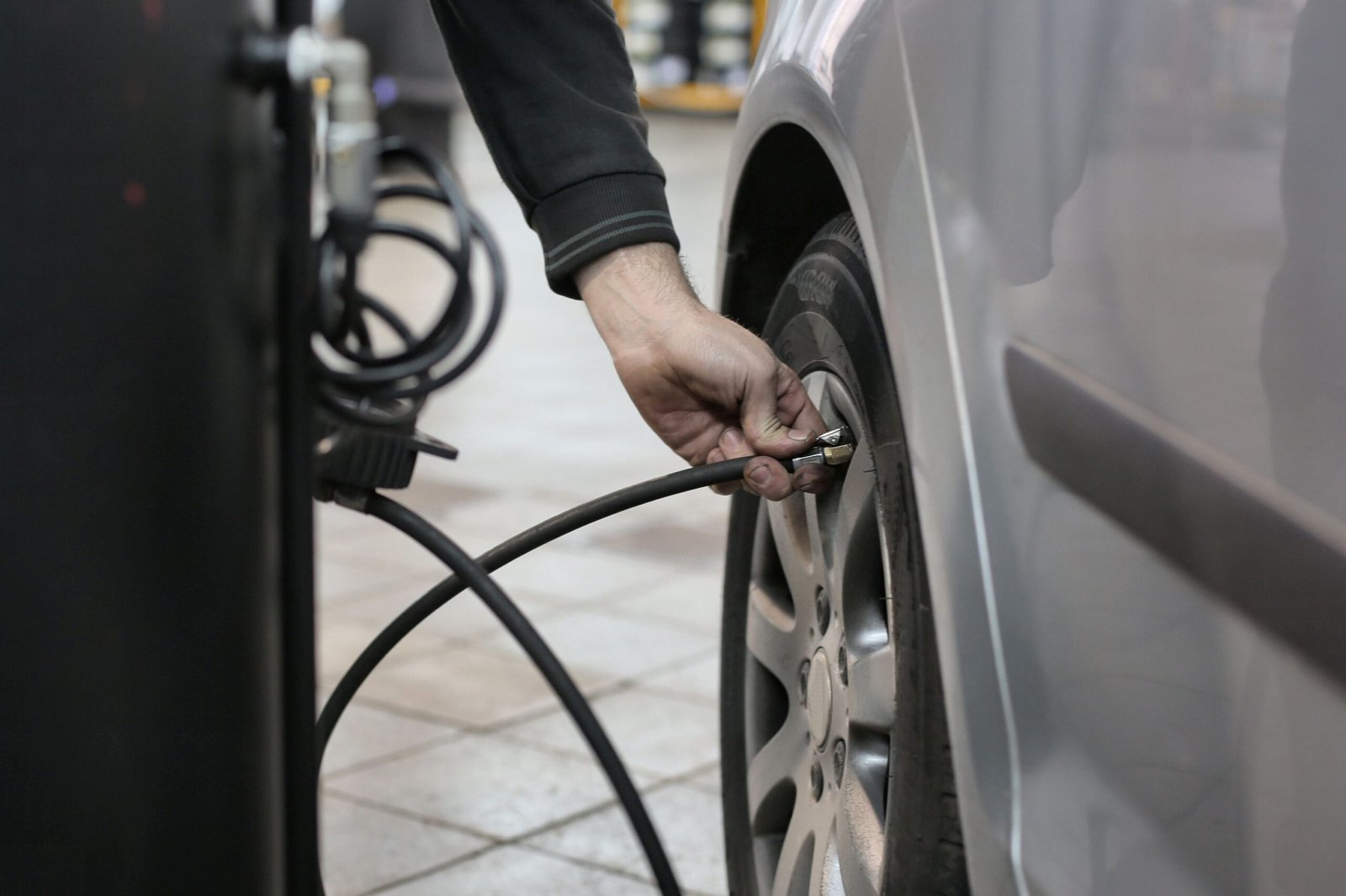
Press the tire pressure gauge firmly onto the valve stem. You may hear a brief hiss of air, but a proper connection should stop it quickly.
Read the number displayed on the gauge. Compare it with your vehicle’s recommended pressure.
5. Add or Release Air
If the pressure is too low, add air using an air compressor. If it’s too high, release a little air by pressing the valve pin.
Check the pressure again after making adjustments. Repeat until you reach the correct PSI.
6. Replace the Valve Cap
Once you’re done, put the valve cap back on tightly. It helps keep dirt, moisture, and debris away from the valve.
7. Repeat for All Four Tires
Don’t check only the tire that looks low. Measure all four tires, because they can lose air at different rates.
If your car has a spare tire, check that as well. A spare tire with low pressure may not be useful when you need it most.
Signs Your Tire Pressure May Be Too Low
You don’t always need a warning light to know something is wrong. Your car may show signs of low tire pressure while driving.
Watch for:
- Steering that feels heavier than usual
- Reduced fuel economy
- The car pulling slightly to one side
- Tires looking flatter than normal
- Uneven tire wear along the edges
- A tire pressure warning light on the dashboard
These signs don’t always mean low tire pressure, but they’re good reasons to stop somewhere safe and check your tires.
Don’t rely on visual inspection alone. A tire can be underinflated without looking flat.
How Low Tire Pressure Affects Fuel Economy
Underinflated tires create more rolling resistance. This means your engine has to work harder to move the car forward.
When your engine uses more energy to overcome that resistance, fuel consumption can increase. You may not notice the difference on a single trip, but over weeks and months, it can add up.
Keeping your tires properly inflated is a simple way to avoid wasting fuel. If you’re trying to reduce your monthly driving costs, this small habit is worth keeping.
Don’t Ignore Your Tire Pressure Warning Light
Many modern cars have a Tire Pressure Monitoring System (TPMS) that alerts you when one or more tires are significantly underinflated.
If the warning light comes on, check your tire pressure as soon as you can. Don’t simply reset the warning and keep driving without checking the tires.
If you repeatedly lose pressure in the same tire, there may be a nail, puncture, damaged valve, or leak around the rim. In that case, have the tire inspected by a professional.
Make Monthly Tire Checks Part of Your Routine
The easiest way to remember is to choose one day every month for a quick tire inspection. You could check your tires on the first weekend of each month or whenever you fill up your fuel tank.
Keep a tire pressure gauge in your glove box so it’s always available. If you use a digital gauge, make sure its battery is working.
This small habit can help you avoid unexpected problems, improve your driving experience, and make your tires last longer.
Final Thoughts
Checking tire pressure monthly is one of those simple tasks that can make a real difference. It doesn’t take much time, costs almost nothing, and helps protect both your car and the people inside it.
Make sure your tires are at the recommended PSI, check them when they’re cold, and never ignore repeated pressure loss. A few minutes of maintenance today can save you money and trouble down the road.
At CarsHub.autos, we believe good car care starts with simple habits. Make monthly tire pressure checks part of your routine, and your car will be better prepared for every journey.