Owning a car comes with an important responsibility: keeping it properly maintained. Regular car maintenance is essential for ensuring safety, improving fuel efficiency, preventing unexpected breakdowns, and extending the vehicle’s lifespan.
Whether you drive a Toyota, Honda, Suzuki, Hyundai, Kia, or another vehicle, following a consistent maintenance routine can save you significant money over time.
Many drivers only visit a mechanic when something goes wrong. However, preventive maintenance is a much smarter approach. Simple tasks such as checking engine oil, monitoring tire pressure, inspecting brakes, and replacing air filters can prevent expensive repairs.
In 2026, modern vehicles are equipped with advanced engines, electronic systems, and sophisticated safety features. Although these technologies make driving more convenient, they also make regular inspections increasingly important.
Here are 10 essential car maintenance tips every driver should know to keep their vehicle safe, efficient, and reliable.
1. Check Your Engine Oil Regularly
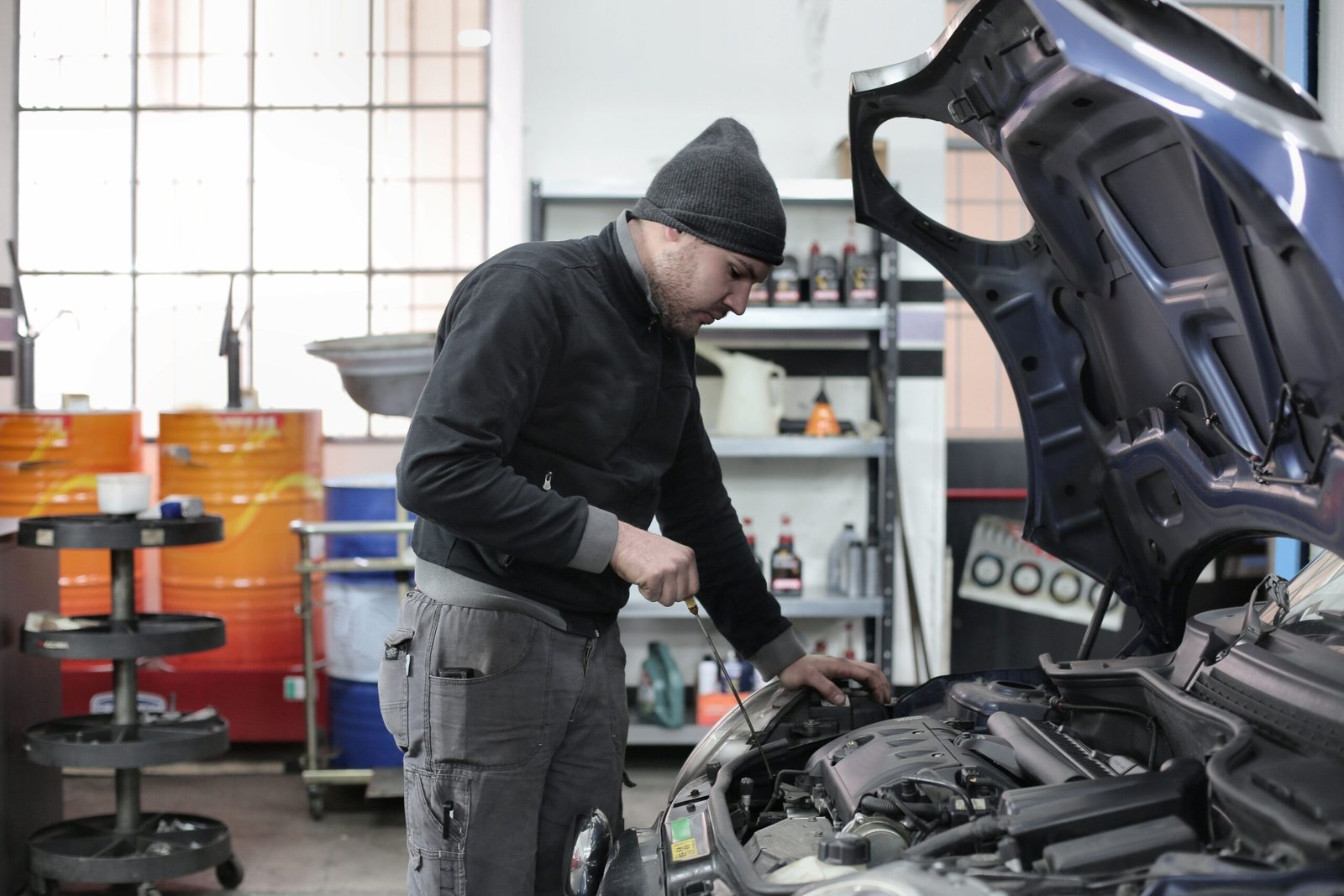
Engine oil is one of the most important fluids in your vehicle. It lubricates moving engine components, reduces friction, controls heat, and helps prevent premature engine wear.
Driving with insufficient or contaminated engine oil can cause serious engine damage.
To maintain proper engine lubrication:
- Check the oil level regularly, preferably when the engine is cool and the vehicle is parked on level ground.
- Use the oil grade recommended by your vehicle manufacturer.
- Follow the recommended oil and filter replacement intervals.
- Watch for oil leaks beneath your vehicle.
- Pay attention to warning lights and unusual engine noises.
Most vehicles have a dipstick that allows drivers to check engine oil levels manually. Some newer models also feature electronic oil-level monitoring systems.
Never ignore an engine oil warning light. If the red oil-pressure warning appears while driving, stop safely and switch off the engine as soon as possible.
Pro tip: Always consult your owner’s manual before selecting engine oil because the correct viscosity and specifications vary between vehicles.
2. Maintain Proper Tire Pressure
Tires are the only parts of your vehicle that make direct contact with the road. Their condition has a significant impact on handling, braking, fuel economy, and passenger safety.
Incorrect tire pressure can increase tire wear, reduce vehicle stability, and negatively affect fuel consumption.
Underinflated tires generate additional heat and rolling resistance, while overinflated tires can reduce grip and cause uneven wear.
Follow these tire maintenance practices:
- Check tire pressure at least once a month.
- Inspect tires before long journeys.
- Follow the manufacturer’s recommended pressure.
- Check tire pressure when the tires are cold.
- Inspect tires for cracks, cuts, and uneven tread wear.
The recommended tire pressure is usually displayed on a sticker inside the driver’s door or in the owner’s manual.
Do not rely on the maximum pressure printed on the tire sidewall as the normal inflation recommendation.
Pro tip: Check your spare tire too. A spare tire is only useful when it is properly inflated and in good condition.
3. Inspect Your Brakes Frequently
Your braking system is one of the most important safety components of your vehicle.
Brake pads, discs, calipers, brake fluid, and related components must remain in good working condition to ensure effective stopping power.
Worn brake pads or contaminated brake fluid can compromise braking performance.
Look out for these warning signs:
- Squeaking or grinding sounds when braking.
- Vibrations through the brake pedal.
- A vehicle pulling to one side during braking.
- A soft or unusually low brake pedal.
- A brake warning light on the dashboard.
If you notice any of these symptoms, arrange a professional inspection promptly.
Brake pads and discs should be replaced according to their actual condition and manufacturer recommendations rather than an arbitrary mileage figure.
Pro tip: Never ignore grinding noises or changes in braking performance. Have the braking system inspected before continuing normal driving.
4. Replace Engine and Cabin Air Filters
Air filters are relatively inexpensive components that play an important role in vehicle performance and passenger comfort.
Your engine air filter prevents dust, dirt, and debris from entering the engine. A heavily clogged filter can restrict airflow and potentially affect engine performance.
The cabin air filter serves a different purpose. It helps remove dust, pollen, and other airborne particles before air enters the passenger compartment.
To maintain both filters:
- Inspect the engine air filter during routine servicing.
- Replace it when it becomes excessively dirty or clogged.
- Change the cabin air filter according to the maintenance schedule.
- Consider more frequent inspections when driving on dusty roads.
In areas with dusty conditions, air filters may require attention more frequently than they would in cleaner environments.
Pro tip: A clean cabin air filter can improve ventilation and reduce unpleasant odors inside the vehicle.
5. Keep Your Engine Coolant at the Correct Level
The cooling system prevents your engine from overheating by regulating operating temperature.
Coolant circulates through the engine and radiator, helping remove excess heat and protect internal components from corrosion and freezing.
Low coolant levels, leaks, damaged hoses, or a malfunctioning radiator can lead to overheating.
Important cooling-system maintenance practices include:
- Check coolant levels when the engine is completely cool.
- Use the manufacturer-recommended coolant specification.
- Inspect the radiator and hoses for visible leaks.
- Monitor the engine temperature gauge.
- Have the cooling system inspected periodically.
Never open the radiator cap or pressurized coolant reservoir while the engine is hot. Hot coolant can cause serious burns.
If your vehicle begins overheating, stop somewhere safe and switch off the engine. Do not continue driving in an attempt to reach your destination.
Pro tip: Do not mix different coolant types unless the manufacturer specifically confirms they are compatible.
6. Take Care of Your Car Battery
A healthy battery is essential for starting your vehicle and powering its electrical systems.
Modern cars depend on batteries for ignition, lighting, infotainment, electronic control modules, and various safety systems.
Battery performance can decline over time, especially in extreme temperatures.
Here are some useful battery maintenance tips:
- Check battery terminals for corrosion.
- Keep battery connections clean and secure.
- Inspect the battery casing for damage or swelling.
- Have the charging system tested when necessary.
- Avoid leaving lights and electrical accessories switched on unnecessarily.
Many conventional car batteries last approximately three to five years, although actual lifespan depends on driving habits, climate, battery quality, and vehicle requirements.
If your engine starts slowly or dashboard lights become unusually dim, have the battery and charging system inspected.
Pro tip: Before replacing a battery, confirm the correct battery size, capacity, and specifications for your vehicle.
7. Change Transmission Fluid According to Manufacturer Recommendations
Transmission fluid plays an essential role in keeping your vehicle’s transmission operating smoothly.
It lubricates internal components, helps manage heat, and supports proper gear engagement.
Different transmissions require different maintenance procedures. Automatic, manual, CVT, and dual-clutch transmissions may use different fluid specifications.
Signs of possible transmission problems include:
- Delayed gear engagement.
- Unusual transmission noises.
- Jerking during acceleration.
- Difficulty changing gears.
- Transmission warning lights.
Not every vehicle requires the same fluid replacement interval. Some manufacturers specify scheduled replacement, while others describe certain transmissions as having lifetime fluid under normal operating conditions.
However, lifetime does not necessarily mean the fluid can never deteriorate.
Pro tip: Never use generic transmission fluid without confirming that it meets your vehicle manufacturer’s exact requirements.
8. Keep Your Tires Rotated and Properly Aligned
Even when tire pressure is correct, tires can wear unevenly because of differences in weight distribution, steering geometry, and driving conditions.
Tire rotation helps distribute wear more evenly across all four tires.
Wheel alignment ensures that the wheels are positioned according to the manufacturer’s specifications.
Benefits include:
- Longer tire lifespan.
- Better steering response.
- Improved driving stability.
- Reduced uneven tire wear.
- More predictable handling.
Many vehicles benefit from tire rotation approximately every 8,000–12,000 kilometres, although the correct interval depends on the manufacturer’s recommendations and tire configuration.
Wheel alignment should be checked when you notice uneven tire wear, steering-wheel misalignment, or the vehicle pulling to one side.
Pro tip: If your vehicle experiences a significant impact from a pothole or curb, consider having the tires, wheels, and suspension inspected.
9. Inspect Your Lights, Wipers, and Windshield
Visibility is essential for safe driving, particularly during nighttime journeys, heavy rain, fog, and dusty conditions.
Your headlights, brake lights, indicators, and windshield wipers should always function properly.
A simple inspection can help identify problems before they become dangerous.
Check the following:
- Headlights for proper illumination.
- Brake lights for correct operation.
- Indicators and hazard lights.
- Reverse lights.
- Windshield wiper condition.
- Windshield washer-fluid level.
- Windshield cracks and chips.
Replace damaged or worn wiper blades when they begin leaving streaks or failing to clear water effectively.
Also, keep your windshield and mirrors clean to maintain good visibility.
Pro tip: Check your lights regularly with the help of another person or by using a safe reflection to confirm that all exterior lights work correctly.
10. Follow Your Vehicle’s Scheduled Maintenance Plan
One of the simplest ways to protect your vehicle is to follow the manufacturer’s recommended maintenance schedule.
Every vehicle has different service requirements depending on its engine, transmission, driving conditions, and age.
Scheduled maintenance may include:
- Engine oil and filter replacement.
- Air filter inspection.
- Spark plug replacement.
- Brake system inspection.
- Coolant servicing.
- Transmission fluid inspection or replacement.
- Suspension and steering inspections.
- Battery and charging-system checks.
Keep records of every service, including dates, mileage, replacement parts, and repair work.
A complete maintenance history can also improve resale confidence when you decide to sell your vehicle.
If you frequently drive in heavy traffic, dusty environments, extreme temperatures, or on rough roads, your vehicle may require more frequent inspections.
Pro tip: Do not rely exclusively on the dashboard service reminder. Consult your owner’s manual for the complete maintenance schedule.
Bonus: Essential Car Maintenance Checklist
Keeping a simple maintenance checklist makes it easier to remember important tasks and identify potential problems early.
| Maintenance Task | Recommended Frequency |
|---|---|
| Check engine oil | Monthly |
| Check tire pressure | Monthly |
| Inspect exterior lights | Monthly |
| Inspect coolant level | Monthly, when cold |
| Check battery condition | During routine servicing |
| Inspect brake condition | During routine servicing |
| Inspect air filters | According to service schedule |
| Rotate tires | As recommended by manufacturer |
| Check wheel alignment | When symptoms appear |
| Follow scheduled servicing | According to owner’s manual |
These are general guidelines. Always follow the maintenance intervals and procedures specified by your vehicle manufacturer.
Common Car Maintenance Mistakes to Avoid
Even experienced drivers sometimes make mistakes that can reduce vehicle reliability and increase repair expenses.
Avoid these common problems:
- Ignoring dashboard warning lights.
- Delaying engine oil replacement.
- Driving with incorrect tire pressure.
- Using the wrong engine or transmission oil.
- Ignoring unusual engine or brake noises.
- Neglecting battery maintenance.
- Overlooking small fluid leaks.
- Skipping scheduled servicing.
- Continuing to drive when the engine overheats.
- Purchasing low-quality replacement parts.
Preventing these mistakes can help protect your vehicle and reduce unexpected ownership expenses.
Conclusion
Regular car maintenance is not simply about keeping your vehicle looking good. It is about protecting your investment, improving road safety, maintaining performance, and avoiding expensive mechanical problems.
By checking engine oil, maintaining correct tire pressure, inspecting brakes, monitoring coolant levels, caring for the battery, and following the manufacturer’s service schedule, drivers can significantly improve their vehicles’ long-term reliability.
Remember that preventive maintenance is usually more affordable than major repairs. A few minutes spent inspecting your car regularly can make a meaningful difference to its performance and lifespan.
Whether you drive a small city car, a family sedan, or a luxury SUV, these 10 essential maintenance tips will help you enjoy safer, smoother, and more confident journeys.