
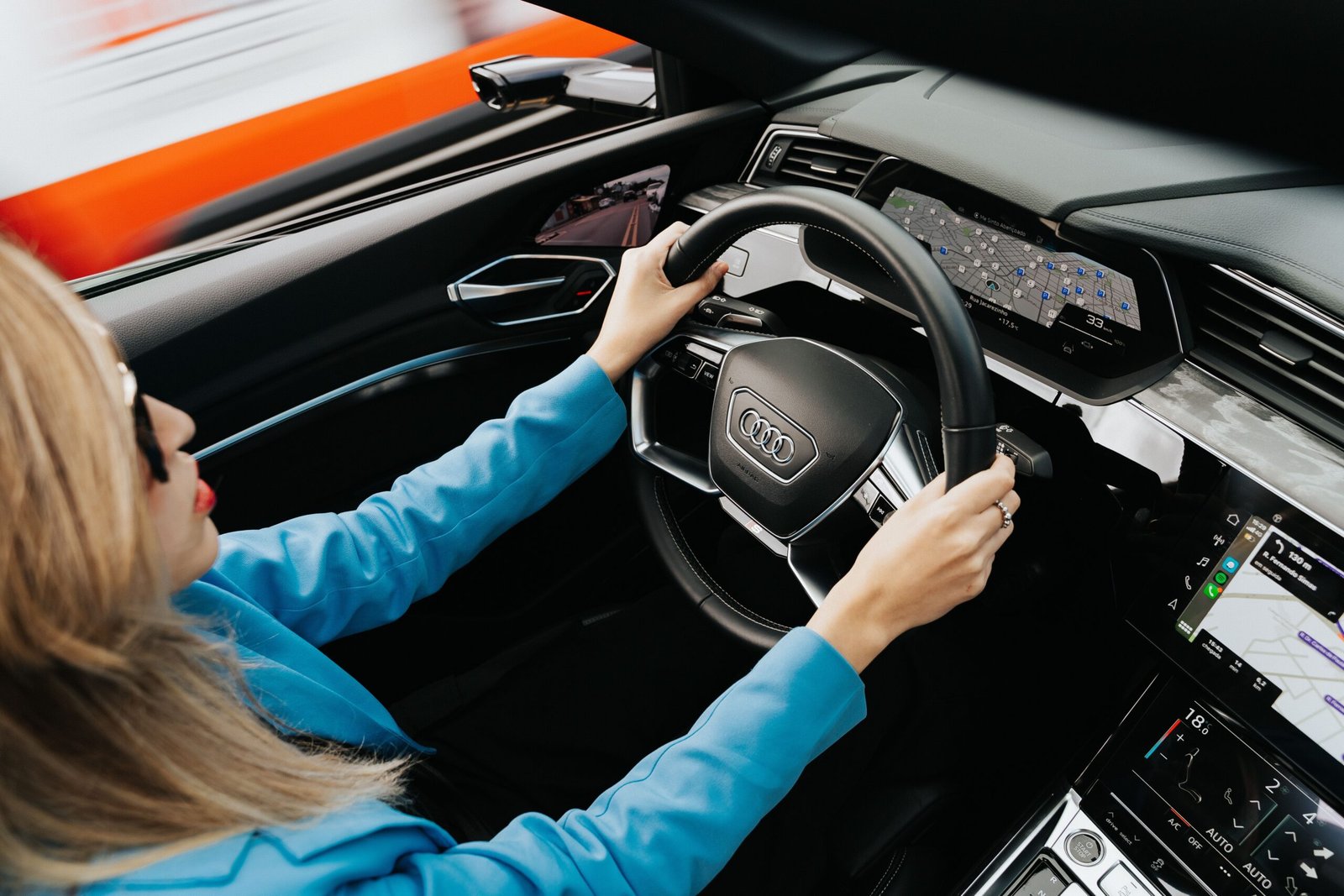

The global automotive industry is entering one of the biggest transformations in its history. For more than a century, cars have evolved through improvements in engines, design, safety, and performance. Now, a new revolution is taking shape—driven by electric vehicles, artificial intelligence, autonomous driving, connected technology, and sustainable manufacturing.
The future of driving will not simply be about getting from one place to another. It will be about making transportation cleaner, smarter, safer, and more convenient.
Here are the major trends shaping the future of the global car industry.
1. Electric vehicles will reshape transportation

Electric vehicles (EVs) are at the center of the automotive revolution.
Traditional petrol and diesel vehicles rely on internal combustion engines. EVs use electric motors and rechargeable batteries, offering several potential advantages:
- Lower direct emissions during driving.
- Reduced dependence on fossil fuels.
- Quieter operation.
- Fewer moving parts and potentially lower maintenance costs.
- Opportunities to integrate renewable energy into transportation.
Companies such as Tesla, BYD, Volkswagen and Hyundai are competing to develop better batteries, more affordable vehicles, and faster charging systems.
The big challenge: Battery costs, charging infrastructure, electricity availability, and access to critical minerals will determine how quickly EVs become mainstream worldwide.
2. Self-driving cars and artificial intelligence

Artificial intelligence is changing how vehicles understand and respond to their surroundings.
Autonomous driving technology uses:
- Cameras and radar.
- LiDAR sensors in some systems.
- Artificial intelligence and machine learning.
- Real-time mapping and navigation.
- Advanced driver-assistance systems.
Companies including Waymo and Mercedes-Benz are developing increasingly sophisticated automated driving systems.
In the future, vehicles may be capable of handling more driving tasks independently, reducing driver workload and potentially preventing some accidents.
However, fully autonomous driving still faces major challenges involving unpredictable road conditions, regulation, cybersecurity, and safety.
3. Software-defined cars: Vehicles becoming computers on wheels

The next generation of cars will increasingly operate like smartphones.
Software-defined vehicles (SDVs) use advanced computing systems to control many vehicle functions. Drivers may benefit from:
- Over-the-air software updates.
- AI-powered navigation.
- Personalized driving experiences.
- Intelligent voice assistants.
- Advanced vehicle diagnostics.
- Connected entertainment and cloud services.
Manufacturers will increasingly compete not just on engines and design, but also on software quality and digital experiences.
The International Energy Agency identifies software-defined vehicles as a major direction for automotive development.
4. The next generation of batteries and charging

Battery technology will play a crucial role in determining which companies lead the future automotive market.
Some important developments include:
- Solid-state batteries: Potentially higher energy density, improved safety, and faster charging.
- Lithium iron phosphate (LFP): A cost-effective battery chemistry already widely used in electric vehicles.
- Ultra-fast charging: Reducing the time needed to recharge vehicles.
- Battery recycling: Recovering valuable materials and reducing waste.
- Vehicle-to-grid technology: Allowing compatible electric cars to send electricity back to the power grid.
The goal is to make electric vehicles cheaper, more practical, and more accessible.
5. Hydrogen and alternative fuels

Although electric batteries are gaining momentum, hydrogen could also have a role in the future of transportation.
Hydrogen fuel-cell vehicles generate electricity onboard through a chemical reaction between hydrogen and oxygen.
Potential applications include:
- Heavy-duty trucks.
- Long-distance commercial transportation.
- Specialized industrial vehicles.
- Some transport applications where battery charging is difficult.
However, hydrogen faces challenges involving production costs, distribution infrastructure, energy efficiency, and availability of low-emission hydrogen.
Battery-electric vehicles are currently much further ahead in passenger-car adoption.
6. Sustainable manufacturing and green mobility

The future of the car industry will involve more than producing zero-tailpipe-emission vehicles.
Automakers are increasingly focusing on the environmental impact of the entire vehicle lifecycle.
This includes:
- Using recycled materials.
- Reducing factory emissions.
- Increasing renewable electricity use.
- Developing sustainable battery supply chains.
- Recycling vehicles and batteries.
- Designing cars for longer lifespans.
The challenge is to make the entire automotive ecosystem more sustainable, rather than simply replacing petrol engines with electric motors.
7. The global competition: Who will lead the automotive revolution?
The competitive landscape is changing rapidly.

China
A major force in affordable EVs, batteries, vehicle exports, and automotive manufacturing. Companies such as BYD and Geely are expanding internationally.

United States
Strong in EV innovation, AI, autonomous driving, software, and advanced automotive technology, with Tesla and major technology companies influencing the market.

Europe
Known for engineering, premium vehicles, automotive safety, and emissions regulation. Volkswagen, BMW, Mercedes-Benz, and Renault are adapting to electrification.

Japan and South Korea
Important players in hybrid technology, batteries, automotive electronics, manufacturing efficiency, and hydrogen research. Toyota, Honda, Hyundai, and Kia are notable competitors.
China’s growing EV manufacturing and export strength is particularly important: it accounted for nearly 75% of global electric-car production in 2025.
8. What will cars look like in 2030–2040?

The following are plausible developments, not guaranteed predictions.
| Area | Possible future |
|---|---|
| Powertrains | Electric vehicles become increasingly mainstream |
| Driving | More advanced driver assistance and robotaxis |
| Interiors | AI assistants and personalized digital cockpits |
| Batteries | Improved energy density and charging |
| Connectivity | Cars communicate with infrastructure |
| Ownership | More subscription and mobility services |
| Safety | More intelligent collision prevention |
| Sustainability | Greater recycling and cleaner production |
By 2030, electric vehicles could represent a much larger proportion of new car sales. The IEA’s 2026 outlook projects approximately 23 million electric-car sales in 2026, or 28% of worldwide new-car sales.
9. The biggest challenges facing the industry
Despite enormous technological progress, the global car industry still faces significant obstacles.
- Affordability: Many consumers cannot afford expensive electric vehicles.
- Charging infrastructure: Rural areas and developing countries often lack sufficient charging facilities.
- Battery supply chains: Lithium, nickel, cobalt, and other materials create geopolitical and environmental concerns.
- Cybersecurity: Connected vehicles could face software vulnerabilities and data privacy risks.
- Employment: Automation and electrification will change traditional automotive manufacturing jobs.
- Global competition: Trade restrictions, tariffs, and geopolitical tensions could disrupt automotive supply chains.
- Consumer confidence: Buyers need reliable technology, strong resale values, and accessible servicing.
The industry must balance innovation with affordability, safety, reliability, and environmental responsibility.
10. The road ahead: What should we expect?

The global automotive industry is moving toward a future where transportation combines electrification, artificial intelligence, automation, and digital connectivity.
The next decade will likely bring:
- More affordable electric cars.
- Smarter driver-assistance systems.
- Greater use of AI in vehicle design and manufacturing.
- More autonomous taxi and delivery services.
- Advanced battery technologies.
- Increased competition between established automakers and technology-focused companies.
However, petrol, diesel, hybrid, hydrogen, and electric vehicles may coexist for many years, particularly because countries have different economic conditions, infrastructure, and energy resources.
Conclusion
The future of driving is not simply electric—it is intelligent, connected, automated, and increasingly sustainable.
Companies that successfully combine technological innovation, affordability, safety, and environmental responsibility will have a competitive advantage in the next generation of mobility.
One thing is certain: the automobile industry of 2040 will look very different from the industry we know today.